
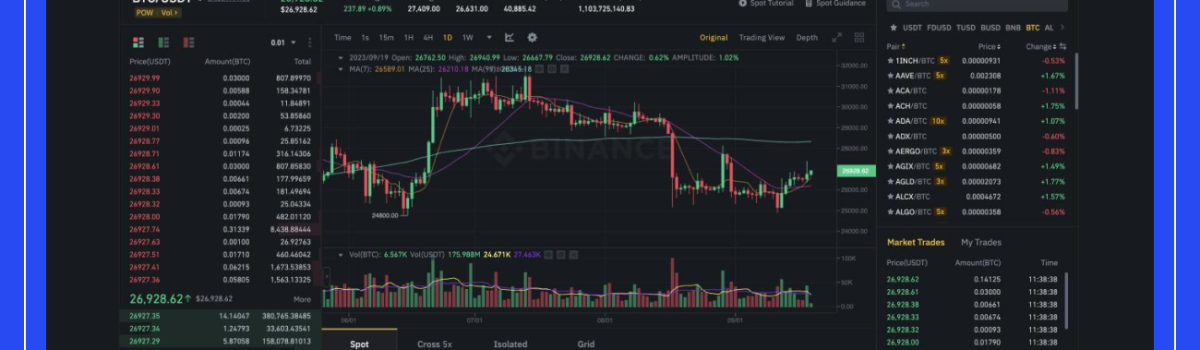
In the fast-paced world of cryptocurrency trading, understanding how orders are processed is crucial for traders aiming to execute their strategies effectively. Binance, one of the largest and most popular cryptocurrency exchanges globally, offers two primary types of orders: market orders and limit orders. These order types serve different purposes and are processed distinctly within Binance’s sophisticated trading system.
A market order is designed for immediate execution at the best available price in the market. When a trader places a market order on Binance, they essentially agree to buy or sell an asset at the current market price without specifying any particular price level. This type of order prioritizes speed over price precision, making it ideal when quick entry or exit from a position is necessary. Upon submission, Binance’s matching engine instantly matches the market order with existing limit orders on the opposite side of the order book. For example, if a broader perspective market buy order for Bitcoin (BTC), Binance will match this request with one or more sell limit orders starting from the lowest ask prices available until the entire quantity requested is fulfilled.
The processing mechanism behind this involves real-time scanning and matching by Binance’s high-performance matching engine. It continuously monitors all active limit orders in its order book to find suitable counterparts for incoming market orders. The execution occurs almost instantaneously due to advanced algorithms optimized for speed and reliability, ensuring minimal latency which is critical in volatile markets.
On the other hand, limit orders allow traders to specify both quantity and exact price at which they wish to buy or sell an asset. Unlike market orders that execute immediately regardless of price fluctuations, limit orders only get filled when there is a counterparty willing to transact at that specified price or better. When placing a limit buy order on Binance below the current market price or a limit sell above it, these orders enter into an organized queue known as an ‘order book.’ Here they remain pending until matched by incoming opposing trades meeting their criteria.
Binance processes these limit orders using its priority system based primarily on price-time priority-orders offering better prices get executed first; among those with identical prices earlier submitted ones take precedence. This ensures fairness while maintaining efficiency in trade executions.
Moreover, users can view their open limit orders anytime through their account interface where they may cancel them if desired before fulfillment occurs.
In summary, Binance handles market and limit orders through distinct but complementary mechanisms tailored toward speed and control respectively. Market orders leverage rapid matching against existing liquidity ensuring prompt trade completion whereas limit orders provide precise control over transaction pricing by patiently awaiting favorable conditions within an orderly marketplace framework maintained by robust technology infrastructure. Understanding these processes empowers traders on Binance to optimize their entry points and exit strategies amid dynamic crypto markets effectively.